

Chimney Cowls and Caps: Choosing the Right Fitting in Bingley
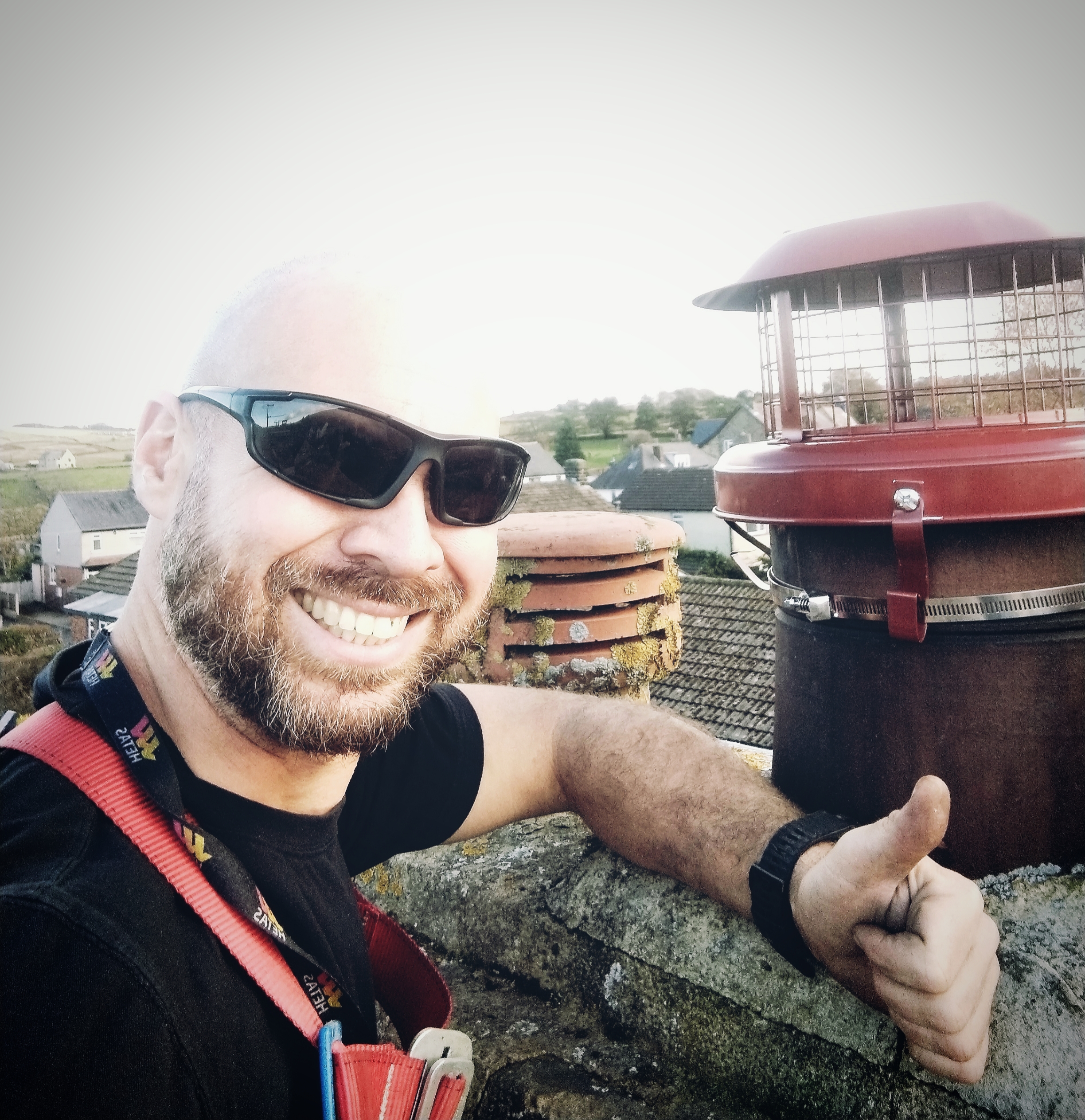
A recent job in Bingley brought home how much the fitting on top of a chimney matters. From the ground, a cowl or cap can look like a small finishing detail. Up close, it needs to be right for the appliance, the flue and whether the chimney is still being used.
We shared this job on our Facebook page after decommissioning a log burner whose flue liner had failed and was badly eroded. At the homeowner’s request, we then dealt with the now-unused flue.
What we found on the roof
During the rooftop inspection, we found a gas chimney cowl fitted to the flue that had been serving the solid-fuel stove. That fitting was unsuitable for this installation.
We removed it, thoroughly swept and inspected the redundant flue, and fitted a vented cap. The relevant decommissioning paperwork was issued on completion.
The failed liner and the unsuitable cowl were separate findings. Changing the fitting at the top would not have repaired the damaged liner or made the stove suitable to use again. In this case, the agreed outcome was to take the appliance out of use and finish the redundant chimney properly.
A working chimney needs the right cowl
For a chimney serving a stove or open fire, any cowl must be suitable for the fuel and the particular flue arrangement. A product intended for one application should never be assumed suitable for another simply because it fits the chimney pot.
There are different fittings for different jobs, including bird protection, rain protection and connecting a flexible flue liner at the top of a chimney. The choice starts with understanding what is below the pot and what the fitting needs to do.
That is why we look at the installation before recommending a replacement. The condition of the pot, the existing fitting and the way the chimney can be accessed all matter when planning the work.
An unused flue needs a different approach
Once a chimney is no longer serving an appliance, a cap designed for a disused flue may be appropriate. On this Bingley job, we fitted a vented top lid rather than sealing the opening solid.
The distinction is straightforward: a disused-chimney cap is for a chimney that is out of use. It must not be treated as a working-stove cowl. If plans change and a fireplace or stove is to be brought back into use, the chimney and its terminal need to be assessed first.
Manufacturers make this distinction too. Midtec lists disused chimney caps separately from its cowls for working flues.
Small fitting, careful work
This was not a job that ended with a first fire. It ended with the homeowner’s decision carried out, the unsuitable fitting removed and the unused flue swept, inspected and capped.
It is a useful reminder that chimney work is about the whole arrangement, including the parts that are difficult to see from the garden. Choosing an appropriate fitting and installing it carefully is a small but important part of looking after a property.
At Bingley Chimney, we supply and fit quality UK-manufactured chimney cowls and caps in Bingley and surrounding areas. If you are unsure what is fitted to your chimney, or have an unused flue that needs attention, we can help you establish the appropriate next step.


Comments